
Crossing boundaries, finding hope
an interview about writing, montage, memoir, stories, history

Hello dear friends,
Sorry for the long silence… here’s a piece that was published in Coastlines last year, based on an interview with Magdalena Ball for Compulsive Reader Talks podcast. With thanks to Coastlines editor, Aidan Coleman.
Topics discussed include: building a book via montage, writing at the interface between personal and public histories, the role of popular culture and tv stories in the way we create our identities, writing for sound (ABC radio), playing with memories in an intentional way, climate fiction, and finding hope.
Or here’s an audio of the full interview (a lot more rambling but also with some readings) if you’d prefer to listen :
Crossing boundaries, finding hope
We would like to begin by acknowledging the Awabakal and Darkinjung people on whose un-ceded lands we live and write.
Magdalena Ball:
The Age of Fibs is a wonderful collection of stories, memoir, and microlit, published by Spineless Wonders. I absolutely love the way it has come together. Many of the pieces were published in other forms and I’ve seen some of them in different contexts. But talk to me about the process of actually pulling the book together and how it became something that is, in many ways, quite different than the sum of its parts. It has become almost a completely new entity.
Beth Spencer:
There’s always been a blurring of the boundaries in the way I write — between story, memoir, essay and poetry — so it took a long time and a lot of experimenting to work out how to build this material into a book.
In 2018 I won the Carmel Bird Digital Literary Award, run by Spineless Wonders. So then I had this short eBook, and I wanted it to be something more, and more deliberate in the way it worked together. For instance, in the themes and cross-overs, and I wanted to add other pieces that had been left out due to the word limit, and new pieces. But I hesitated as I wasn’t sure if there would be enough interest in such a hard-to -categorise book.
But one of the things I’ve learned is that my writing has much more impact when I can bring it together into a body of work. Even when you’re writing separate pieces or for different reasons, there’s still that underlying consciousness and recurring concerns. And it can come alive in a new way when you can craft it together as a body of work. So I love that you see it as an entity, because that’s how I feel about it — that it’s become something apart from me now, with its own life and energy.
Magdalena Ball:
Some of the pieces I knew quite well, but I was seeing new things in them and new correspondences, and thinking about the connections between the them. It was like there was a new liminal space between each piece that didn’t exist when they were on their own, or even in the shorter ebook.
Beth Spencer:
A lot of my work is montage in some form or other. Within the individual pieces and in the ways they work off each other. I like to come at a story or idea from different angles, and piece it together from fragments. So while there’s usually a narrative pull, there are also lots of gaps and spaces and contradictions. This lets people bring in their own experiences as they read; and it’s different each time you read it. Which I think is how memory works.
How to Conceive of a Girl was like that. And Vagabondage was a memoir of a year I lived in a campervan told through poetry, so it was a narrative montage too.
Magdalena Ball:
It’s wonderful for a reader because it allows for multiple pathways through the world of the book. You always bring something to what you’re reading, you have your own unique perspective, and so this is a kind of collaborative experience with your writing in the reader’s mind, which is really quite delightful.
Beth Spencer:
I think with a piece of writing that, while there’s a benefit for me in writing it, particularly if I’m exploring an aspect of my personal history in relation to public history, there’s a whole other thing that happens when it lands and it gets read, and you get the response and discussions that go around it. I find that’s when something really shifts in me; and I hope in readers too.
Something happens when readers put their energy into it. It comes alive in a new way. So, I love that. Thank you.
Magdalena Ball:
You wrote new pieces for the book, but one of the pieces in here, ‘Bewitching’, is on I think its third iteration. I remember watching the Bewitched tv series as a kid in my grandparents’ bed when I was sick. So I’m just wondering how much that piece has changed in each of the different incarnations and why you chose it to begin the book.
Beth Spencer:
There are a few pieces in here that came out of what I think of as ‘the Golden Years’ of ABC-Radio National. Either commissioned for radio, or which began as text and then had a second life as a sound piece. I was very fortunate to work with some great people at RN — like Claudia Taranto, Brent Clough, Robyn Ravlich, and so on — who created an amazing and nurturing space for freelance writers. And that way of working with text and performance — it’s so intimate, and can go back and forth between the cultural and the personal, and always having to hold the listener’s attention, so it’s very precise writing — it really suited me.
Unfortunately that’s all changed, and there’s almost no room now for freelance writers or text-based ideas at RN. Which I think is a great loss, as they really did nurture a lot of writers in the past.
But… regarding ‘Bewitching’, I think that began as an interview I did with Claudia Taranto for a program she made. Then when the movie came out I wrote a piece for The Age newspaper. Then when I started building Fibs into a book I began to recognise that one of my recurring themes was the way we use popular culture to create ourselves, how it merges with our own stories and our own histories, and how we use those stories to work out who we are.
So I reshaped and rewrote it, first as a poem which was published in Burrow, and then rewrote it again as a microlit to fit this book.
Magdalena Ball:
There is a line in it which I particularly love, and which I feel colours the rest of the book: ‘The feminine, the queer, the magical. The irruption of the repressed right here in my living room every night at six o’clock. Busting open all the doors and windows. Letting in the stars.’
Beth Spencer:
TV was magical in those days. We didn’t have many books in my home, and I was a TV baby. So that narrative language of TV is what I cut my teeth on. Scenes splicing in and out, and then between them you have ads popping up, and then it might go to a news flash. I think that has really influenced my writing style. And when you look into those mid to late sixties sit coms, they were quite radical in the way they talked about gender and class and authority.
MB:
Throughout the book, you often take this kind of kitschy 60s, 70s and 80s pop culture — like Bewitched, and of course, Fatal Attraction, The Monkees, and so on — and elevate them to something that’s really quite extraordinary. And there’s all sorts of artefacts — photos, a therapy drawing, the Fibs bra… There’s a kind of referencing here that conflates memory and the fictive, and this is another of the themes that ties the book together.
BS:
Memory is such a complex thing. We re-write memories every time we bring them to consciousness. Every different thing that triggers a memory leads you to draw something different out of it. And they gain and lose information over time.
And as you were saying, when these pieces are put in a certain order together in a book, they react off each other; and that’s what memory does, it’s always re-inscribing, recreating molecules that no longer exist and splicing them into the present.
I like the way you can play with memory. I mean, you can just re-trigger it over and over again, and just redo the same thing. Or you can play with that memory, and turn it slightly, so the meaning you attach to it — and your beliefs around it — can shift. And that can expand how you might choose in the future. So, I love consciously working with memory — with public memory and private memory, and the way they intersect and play off each other.
MB:
Yes, wonderful. And you’re working with these tv shows that are so much a part of a certain generation that they’ve become an inherent part of who we are. And you even bring in different tv references through your final piece so that in a way it circles back to Bewitched in the opening.
BS:
There’s a form that’s come out in the past few years called ‘Autobibliography’, where someone will take a famous book — like George Eliot’s Middlemarch — and weave that into a personal memoir. I guess I’m doing that, but using popular culture rather than ‘high’ culture.
The piece at the end — ‘The True Story of an Escape Artist’ — began from a commission for a book called Family Pictures, edited by Beth Yahp. The brief was ‘write about your family using photos’. Everyone else was smart enough to write about dead people but, naively, I chose five family photos that were evocative to me in different ways.
It ended up being an extremely challenging piece to write, because at the time, my parents were going through a difficult and unexpected breakup at age 72, and my family was kind of exploding in shock and outrage. I was also doing Gestalt therapy for the first time. And then here I was writing about it all.
So I had to use some writing tricks to be able to tell my story, in a way that was honest and revealing, but at the same time not actually spill the beans on personal things that affected others.
One of the things that came out of this process was seeing the way we so often recreate challenging family patterns in our relationships. I had created a new family when I went to Uni and I met some wonderful people — and many of them are still part of my friend family — but it was interesting to notice how I still slotted myself in as very much the youngest sister.
I think when you have a lot of issues to work through, that it as if you are unconsciously finding or creating something that’s in a form that you can work with. There are similarities, but it’s an improved version, and more open to change.
So somewhere along the way of writing this I decided to recreate the photos using my friends. And Helen Kundicevic, a friend and artist, was the photographer for those.
For instance, the first photo in that piece is the 21 grandchildren. And at the end, there’s a photo where I got 21 of my friends together. And they were fantastic. Each of them was assigned a person to copy in the photo and they did the exact actions and expressions and so on. And there just happened to be three babies born around the right time to match the three babies in the photo. It worked out beautifully.
So it’s like there is the family you’re born in, and the family of creation, and then playing around in the field of those memories and relationships.
MB:
And that’s another theme that works through the book — and this is one of the things that ties the fiction and the nonfiction together — the idea of identity as a construct. And you play with that. And you play with that in so many different ways.
BS:
Yes, identity is not a solid fixed thing. It’s always relational.
MB:
And those relationships change.
BS:
Everything is constantly changing.
MB:
I love a line in ‘The True Story of an Escape Artist’ where you say, ‘Every family member is a competing family historian’. Which is of course true. And then you follow with, ‘I make no claims to be objective. I am a habitual fiction writer, and rewriter of history.’
BS:
Yes, indeed. I think only one of my brothers, Brian, has read this. And, I said to him, how will they cope with me, the youngest child, writing about the family in this way? And he said, ‘They’ll be very, very ashamed, and very, very proud.’
MB:
It’s amazing what people are ok with, as opposed to what they do get upset by. Like, the really horrific revelations often don’t seem to bother people. But calling them daggy…
BS:
Haha, so true. Although when I did show my Mum — because in the original book they used a photo of my sister, my brother and me on the front cover, so even though my family aren’t readers, I didn’t want her to hear about it in a negative way from someone else. So, I showed it to her, and she sat and read it. And when she had finished I said, ‘Look, I just want to explain why I labelled one of the photos, the daggiest family in the world… and she said, ‘Oh, I don’t mind our family being called the daggiest family in the world.’ Oh. So then I said, ‘Do you know what a dag is?’ And of course didn’t know what a it was, but it was the most something in the world. So she was happy with that.
MB:
I just used that as a hypothetical example. I didn’t realise it was one that…
BS:
And then she said, ‘But what I don’t understand is why is it called “The True Story of an Escape Artist”, when it’s not true.’
I said, ‘Oh. Which parts did you think were not true?’ out of curiosity. And she said pointed to a part in it where I talk about standing in front of the noxious weed bush in our garden as a child swearing my head off, every filthy word I could think of that I’d learned at school. And she said, ’That wasn’t true.’ And I loved how she was so confident that that couldn’t have been true, even though of course she wasn’t there. But dear little Beth wouldn’t have done something like that.
So yes, is it always interesting that people see what they want to see a lot of the time, and that’s actually quite comforting as a writer.
MB:
Yes. And then there’s a history of saying ‘the true story’ for things that are wildly not true...
BS:
Absolutely. And it’s also a nod to ‘bullshit artist’ as well.
MB:
Yes, exactly. There’s so many lovely plays happening.
I think we could talk for about three hours. But one of the pieces that stood out for me because it is quite different is ‘In the Hologram Forest.’ It’s the only Sci-Fi, but it does work beautifully to my mind. How did you work out what was needed to fill the gaps? At what point did you go, I need a piece that’s going to do X?
BS:
This is actually a fragment that I lifted out of a novel that I might write one day, called ‘I Make the Beds They Lie In.’ Set in 2042, from the point of view of an indentured servant who works in one of the bunkers of the rich. And I liked that little moment in it — where she is talking with the coder who has created a Hologram forest. And with the television connection, the way the servants watch old 1960s sit coms at night, it felt like it also belonged in here. It also just seemed impossible to write a book at the moment without referencing the climate crisis in some way. So there are these microlit pieces scattered throughout.
I found it interesting to see how many of those 1960s series were both conscious of and anxious about the future. The Jetsons, The Flintstones (being back in the Stone Age but with modern accessories), I Dream of Jeannie with the astronauts. And The Beverly Hillbillies, which is mentioned in this piece, is of course about the discovery of oil, and about extreme wealth and the choices we make.
And then the idea of a hologram forest, which is a different kind of fictive space. One that references a real space, but is also predicated on its absence.
I’m really glad you picked that up and felt that it does fit.
MB:
Such a powerful piece. And by having it in that spot in the collection it really does raise this question about responsibility, and loss and trauma and what remains. And this colours the pieces around it in such a beautiful way.
BS:
Thank you. You really are a wonderful reader. And going back to that issue about how we remember things — and that’s what writing history is, a public remembering — how we choose to do that, every choice we make, affects and colours our future choices.
So even though there’s this terrible grief and feeling of powerlessness about what’s happening with the climate crisis, every time we remember something — or write about something — we’re also changing the kind of choices we offer to ourselves. So thank you for recognising that.
MB:
It’s also a little bit of hope. It’s a weird kind of hope. But there is a hope even in that piece, that something has remained, that it’s not all lost. And I think that colours the other pieces around it, including the final piece, which is quite a long one. You are very subtle with it, but there is this sense of a kind of trauma running through it. An unspoken undercurrent, the flip side of the family secrets. You’ve talked a little bit about this notion of coming at things in piecemeal and slant and allowing it to unfold. So maybe just finish off by talking a bit about that.
BS:
It’s so interesting that you raise this in the context of the Hologram Forest, because one of the things I find extraordinary about the planet is that things come back. Even when you think things have been eradicated or become extinct, if you do provide a bit of space and habitat and context — and the thought is the start of that — things do sometimes come back. It’s amazing how things can regenerate.
Even with this piece about my family, this was written at a time when I really did just want to escape my family of origin and create a new family with my friends. But since then I’ve found that if you hang in there long enough, that some things can shift. So a few things have happened in the past decade, which I’ll probably write about some time, that have profoundly altered my relationship within that family.
And I guess that fits with my idea that if you just keep going, and you keep playing with things, and you play in an intentional way, if you’re always doing it with curiosity and question, then it can often open up into something different.
MB:
There is this sense of almost decolonizing the language that runs through your book, and that’s there right from the beginning with Bewitched — this queer, magical, undermining of that world that Darrin represents.
Darrin? Darwin? Derwent?
BS:
Yes, I love the way his mother-in-law always got his name mixed up.
MB:
And he is like a representative of the straight, patriarchal capitalist structures. And this again is an undercurrent throughout the book, almost a kind of mystical quality to it, that subversiveness, which is really quite beautiful.
BS:
That’s a really great way of looking at it.
MB:
We could talk for hours about this but we’re out of time. Congratulations on The Age of Fibs, it’s a fabulous book.
*
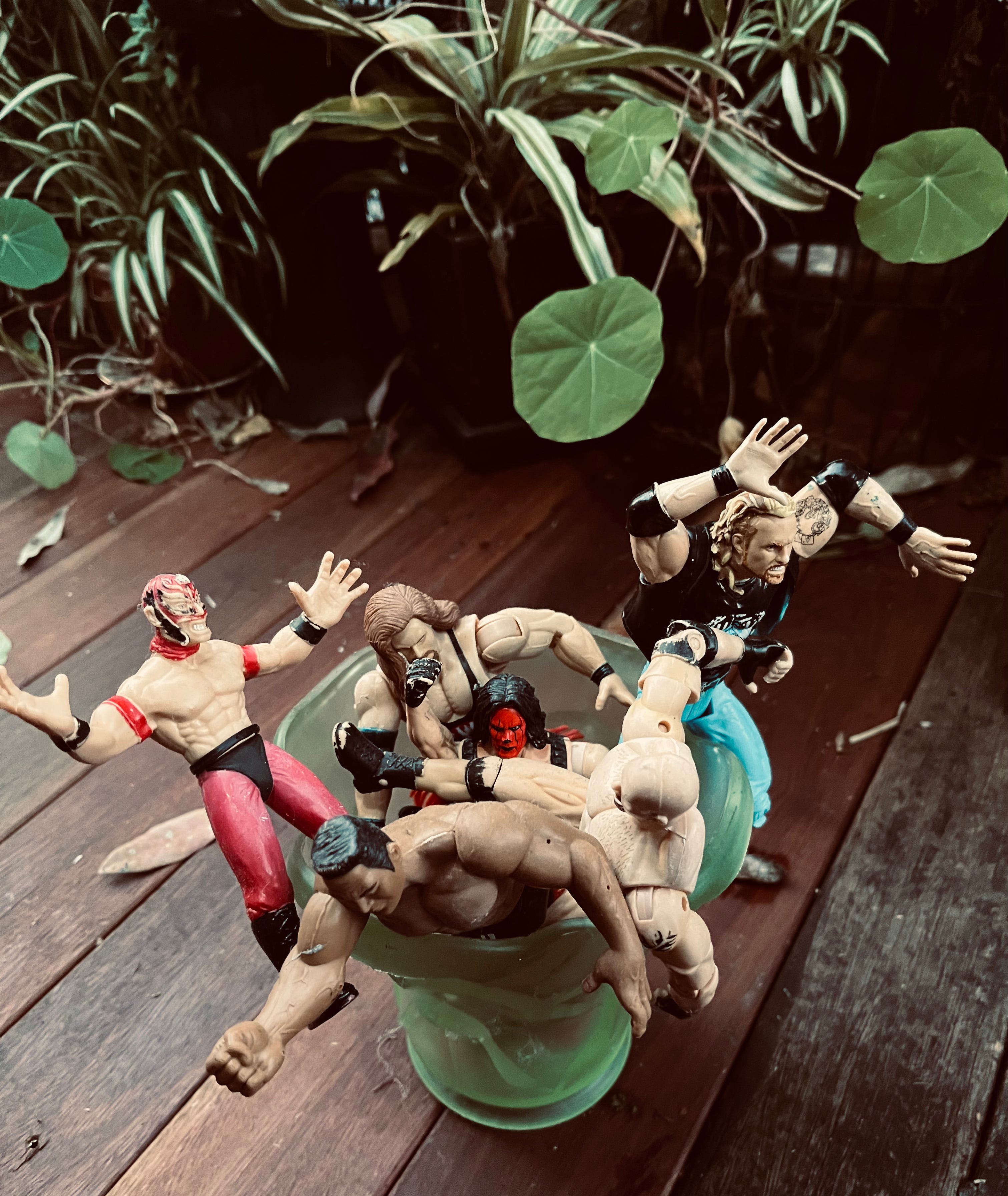
The Age of Fibs: stories, memoir, microlit is published by Spineless Wonders.
Magdalena Ball is a poet, novelist, and the managing editor of Compulsive Reader, a review website and podcast that has been running for over twenty years. Her latest book is Bobish, a verse historical-memoir (Puncher & Wattmann, 2023). Her poetry has been published and anthologised widely and shortlisted in numerous prizes, most recently for the 2023 Red Room fellowship.
The Compulsive Reader Talks podcast can be found at Spotify or wherever you get your podcasts. And Compulsive Reader - the newsletter - brim full of news and reviews - is now also on Substack (click here to subscribe).
And a brand new issue of Coastlines was launched this week and is now available online here > https://coastlinesjournal.com/issue-11. Keep an eye out for news of a zoom launch. The one last year for issue 9-10 was really special, intimate and rich with readings.
If you like listening to interviews with writers — check out the fabulous Australian Shorts Podcast, run by Karen Holland where she talks with short story writers and gets them to read a full story. So many gems there.
Thanks so much for hanging in there in this strange old world, and reading and caring and engaging in deep and wonderful conversations.
much love,
Beth
ps two more links — 1) the interview Maggie mentions that she did with me about Vagabondage can be found here —
And here’s an interview I did some time ago with her about her Flying Islands poetry book, High Wire Step, for the Climactic podcast:
Loved reading this Beth - and I love that your book is so idiosyncratic and personal and what you say about how private & public memory can play together. For my PhD I looked at gaps & bricolage in life writing, identity construction through cultural objects- and I wish I’d known about Fibs then! My memoir is all bits & pieces and gen X reflection … about twice a year I get the energy to try & flog it - yours gives me hope! Hope yr health stuff calms down and your next book is coming along.
What a delightfully thoughtful and thought-provoking interview! Thanks, Beth. There are so many topics in your interview which could lead to lively discussions between writers and readers. Your Mum's reaction to your swearing was classic. Some of us feel that our memory/point of view is the only truth. It reminded me, for a different reason, of the time in high school, when all I needed to get out of the house and catch the bus, was one HB pencil. No-one in the family understood how important it was. My pleas were being ignored. I had to have the pencil and the bus was due. So, I stood in the hallway and screamed - something I'd never done before. I screamed 'bloody, bloody, bloody.' Mum and my sister (who I knew was the real culprit whenever I had a missing pencil/pen) suddenly appeared. My sister kindly offered her pencil - which in truth was my pencil - and all was well. I managed to catch the bus and had my HB pencil for Drafting that day. I also love your the talk about identity and the importance of different types of families e.g. friend families. And, I love the way you touch on how our own family relationships can change over time. This interview stirred so many memories. Thank you, Beth.