
Why I love tiny poems
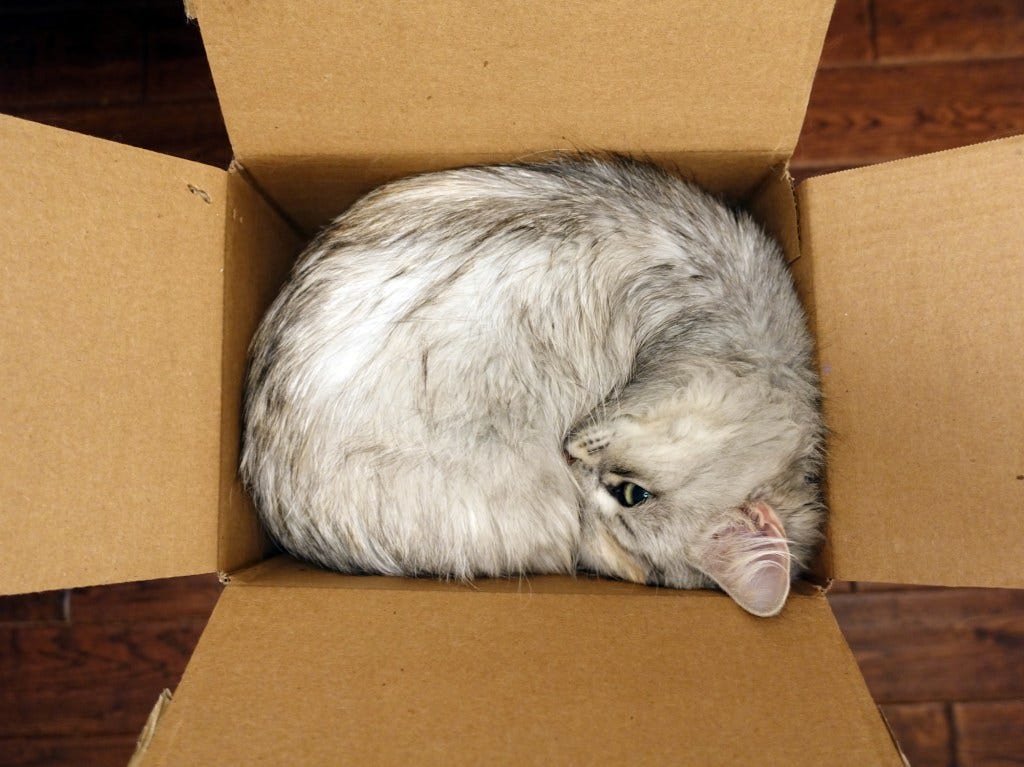
if it fits, I sits


This month many Australian poets will be busy-beavering away at refining and polishing their long poems for the annual Newcastle Poetry Prize anthology. ‘Long poem’ in this case being up to 200 lines, so it’s a rare chance to play with extended form.
But I recently had a series of Monostichs in Island Online.. so I thought I’d go in the opposite direction and look at tiny poems.
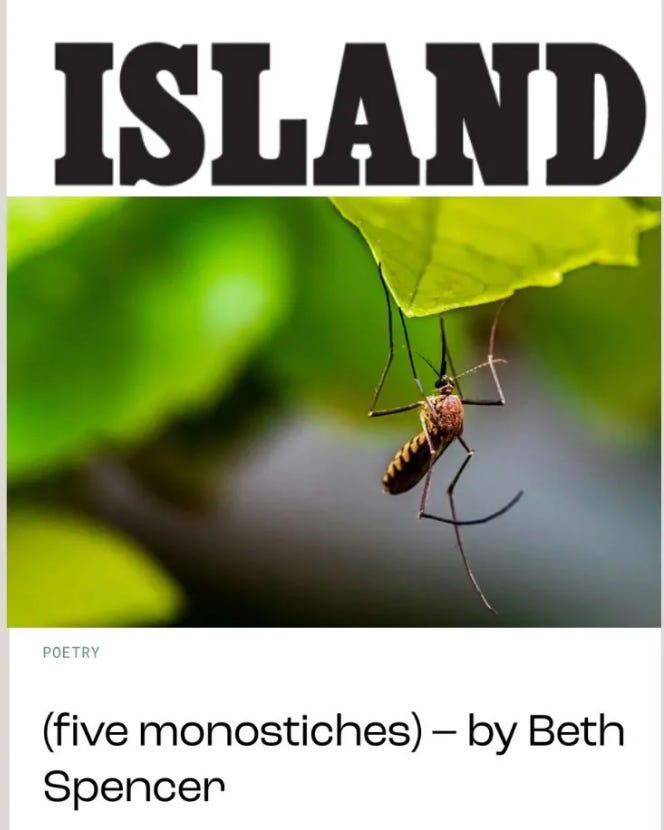
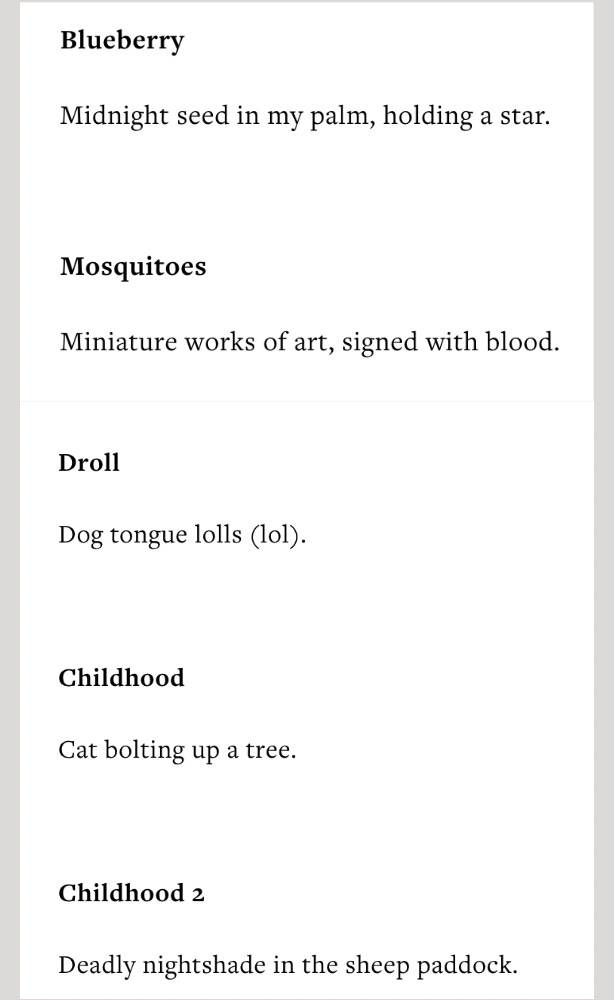

A Monostich (from mono meaning single and stichon meaning row, line or verse) is a complete poem in one line.
A couple of famous ones are
And the single string of the sea trumpets. — Guillaume Apollinaire
If you shed tears when you miss the sun, you also miss the stars. — Rabindranath Tagore
John Ashbery’s ‘37 Haiku’ is basically a series of monostichs. Or check out this wonderful example of inter-connected one liners - ‘Single Lines Looking Forward. or One Monostich Past 45’ from francine j. harris, which begins ‘The joke is orange. which has never been funny.’ (Yes, that 45.) You can also hear her read it at that link.
I can’t remember how I came across the form, but it just felt like home to me for some reason. (A bit like the first time I attached a strap to my guitar and stood up with it.)
I had tried haiku in the past but it just didn’t seem a good fit. Not sure why. Too calm perhaps for my jittery brain? Too definitive perhaps, even though haiku has been called ‘the unfinished form’ - with the reader always the one to finish the poem. (But isn’t that the way with all poetry?)
Here’s Billy Collins, in his poem ‘Japan’:
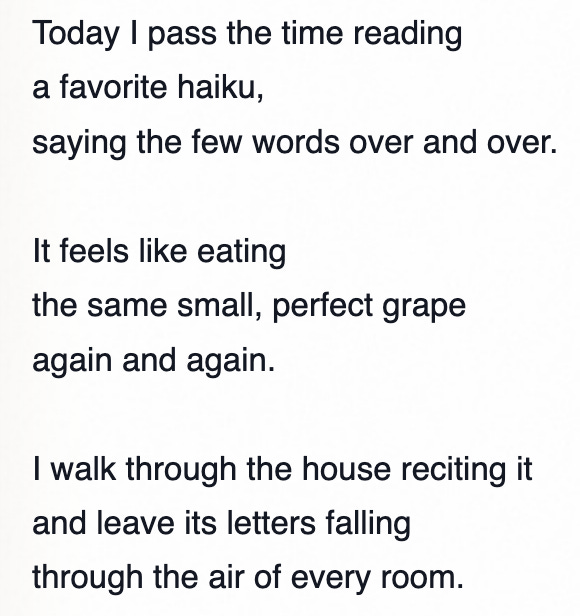
Haiku is a beautiful form, and in the modern versions you don’t have to stick to the traditional 17 syllables. But if there is a principle to haiku it is the creative crystallisation of a single moment. So setting the scene is important. Like in this famous one from Bashō:
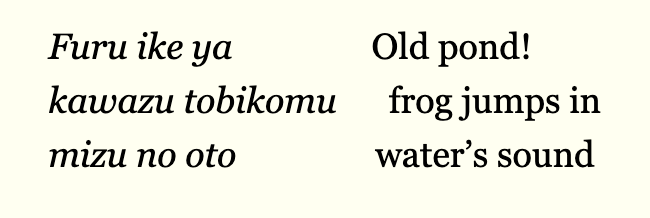
This translation is by Robert Aitken, and you can read other 32 translations of it here, with Aitken’s reasons for his choice.
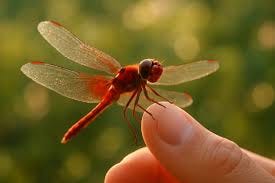
There’s a famous story of Bashō with one of his students.
The student presents his haiku —
‘Red dragonflies! Take off their wings, and they are pepper pods!’
And Basho says, no:
‘Red pepper pods! Add wings to them, and they are dragonflies!’
*
Come to think of it, the first poem I ever wrote was a tiny poem. Rescued years later from a box of bits about to be turfed out by my mother, and used in a story called ‘The Dear John, Dear God Letter’ (in How to Conceive of a Girl).
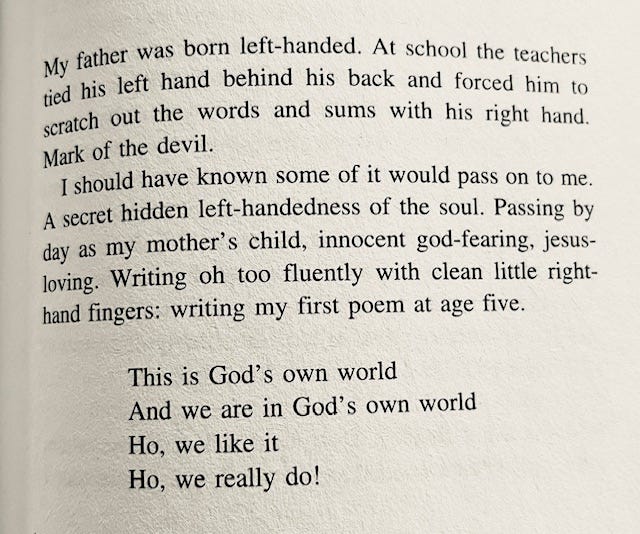
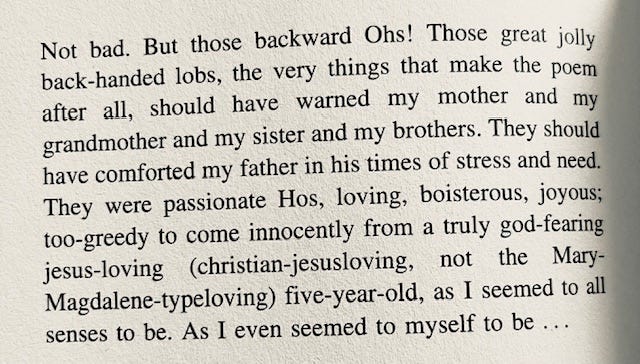
Not very Zen either.
(Hmm.. Perhaps not so strange to be getting an ADHD diagnosis all these years later.)

And in related news: this week is the 30th United Nations Climate Change Conference, to be held this time in Brazil on the edge of the Amazon forest. And some brilliant spark in the organisation decided that poets should be a part of this. So they contacted the Australian delegation and asked for poet Amanda Anastasi - who was previously commissioned as a poet by the Climate Change Communication Research Hub at Monash University - to write a poem for the COP gathering.

Amanda has written about this at her blog. The whole post is worth reading but here’s an extract —
The only poet in the room, I sat silently with pen in hand, a notebook and a headset mic beside me that I would wear when I performed the poem I was yet to write. Several cameras were set up, as the event was being filmed by the Brazilians for a documentary to be submitted to the UN at COP30. I was informed that the text of my poem will be displayed in the Oceania pavilion during the 12 days of COP30 in Belém. No pressure. Think determination mixed with anxiety combined with imposter syndrome, and a passion to communicate the climate impacts of the region.
I soon noticed there was a complete lack of political speak or climate delay tactics here. This was a room full of individuals with practical and ambitious solutions that were clear, planned, costed and well thought out. They spoke with more conviction and humanity than any politician I had heard, and each focused on improving life for people on the ground and on the coasts who were experiencing undeniable climate impacts.
No pressure! (But fitting, perhaps, given the pressure cooker intensity of the climate crisis and the need to be creative in paying attention and taking action.)
She’ll be sharing the poem when the conference starts on Monday. And you can sign up for her newsletter at her blog (scroll down at her page). But I’ll also see if I can share it here in the comments when it’s available.
Meanwhile you can see some of her poems about climate change here — and by sheer coincidence (serendipity?) they are monostichs:
The COP gatherings are hugely important, and never more so. Why do we not hear more about this in our media? (Yes, a rhetorical question, I know, I know… when those doing the most polluting control the biggest media outlets.. etc etc.)

Anyway, huge kudos to whoever decided to include poets. Wouldn’t it be great if poets were considered essential at all these major events?
*
And finally, if you’re a poet — especially one who either hasn’t published a book yet, or perhaps you write poetry as a sideline to your main form of writing, or are experienced but just feel like you’d like to be part of a workshopping group led by an award-winning poet — check out this offering from Flying Islands - publisher of over 100 gorgeous tiny books. (Well, tiny as in pocket sized, altho often quite substantial page-wise.)
Publisher, poet, artist and blogger Kit Kelen runs a year-long workshop with a new small bunch of people each year. With ongoing encouragement and workshopping of poems, plus monthly workshops by other poets (me being one of those). The cost is $500 for the entire year’s mentoring and workshops, and this money instantly makes you a Patron of the Arts as it is ploughed back into the press to publish more books.
And you can buy Flying Islands Pocket books directly from their website for a mere $12.50 each - including one from me - The Party of Life - and including (again coincidentally) a wonderful book of Haiku, A Ghost Gum Leans Over, by Myron Lysenko.
You can also get Kit’s latest book, Aubades, from Walleah Press here. And if you are thinking of tackling a long poem for the Newcastle Poetry Prize (closes 7th December - but note: 8pm, not midnight), check out Kit’s (continuing) series of blog posts about writing long poems.

Thanks for reading! The pussy cats here and I would absolutely love it if you felt like sharing this on substack or socials or just sending to someone who might enjoy it.
May there be many tiny moments in your day that lift and nourish you. And please feel free to post your favourite tiny poem in the comments.
And as Nelson Mandela said, if you think you’re too small to make a difference, try sleeping in a room with a mosquito.
Here’s some other posts you might like if you enjoyed this one - about the notion of ‘small t trauma’, and the original tiny homes.


much love,
Beth

Great post Beth. So informative. I think I have fallen in love with monostitches (yours, anyway).
Have saved your post to properly immerse myself later. Found your tiny gems in their Island home too.